


Brain Test: Tricky Puzzles
4.7119.56K Reviews
App Specs
- Version
- Varies with Device
- Updated On
- License
- Free
- Downloads
- 100,000,000+
- Developer
- Unico Studio
- Categories
- Trivia
- Platform
- Android, iOS
Screenshots
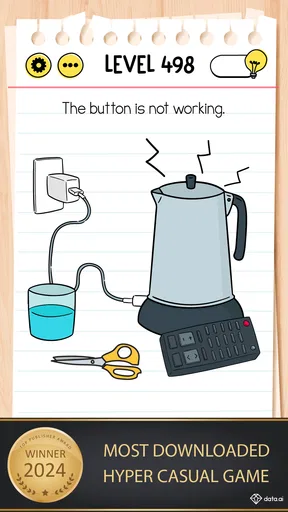
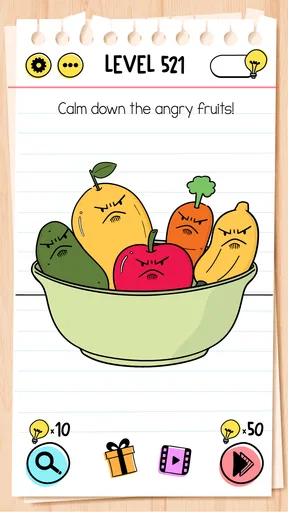
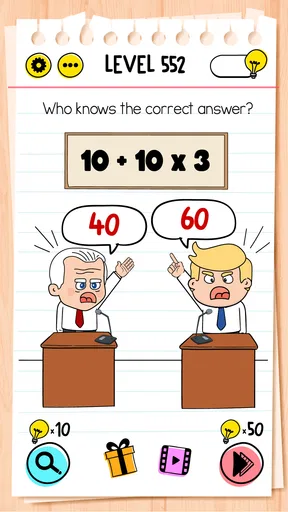
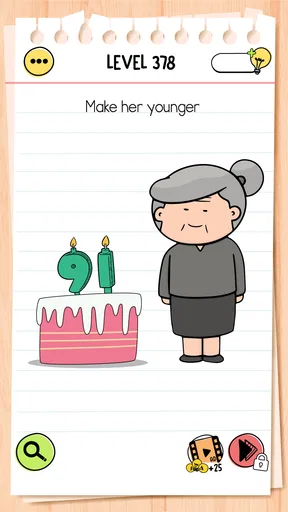
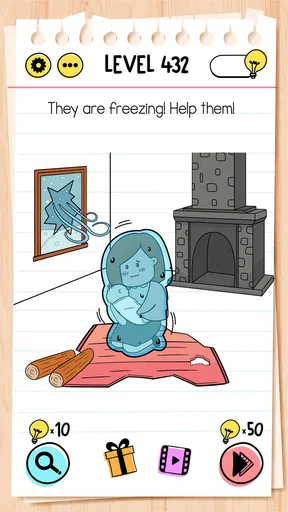
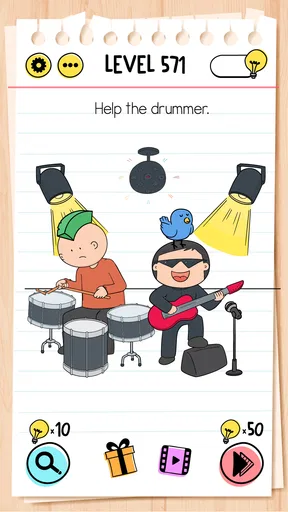
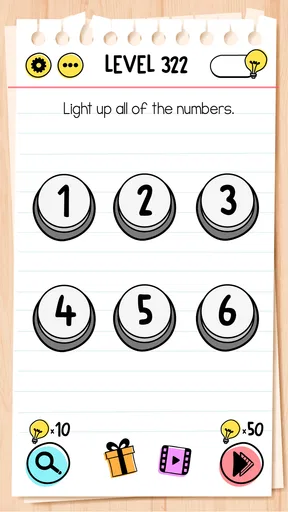
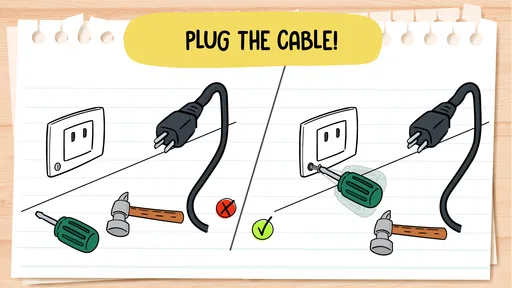
 Analysis by AppCompare
I reach for Brain Test: Tricky Puzzles when I want a short game that asks me to look at a problem differently, rather than simply recall facts or move quickly. It is a trivia game from Unico Studio, but its appeal is closer to a collection of visual brain teasers than a conventional quiz. The humor and unexpected answers give it a playful mood, while the puzzles reward patience and curiosity more than speed.
A playful first impression
The presentation is deliberately uncomplicated: a puzzle takes center stage, and I can focus on what the prompt and picture might be asking me to notice. That uncluttered approach suits the game. Its jokes and odd twists do much of the work of making a level memorable, rather than elaborate scenery or a complicated interface. I would not choose it for rich animation or a detailed story world, but I like how quickly it gets me from opening the game to considering a puzzle.
That quick start also makes it easy to fit into spare moments. I can try a level while waiting for a drink or taking a short break, then put the phone away without needing to remember a long plot or manage a complex session. The trade-off is that a simple visual style may feel modest if I am looking for a polished, cinematic game. Here, the art serves the puzzle instead of competing with it.
Guides and Analysis on Brain Test: Tricky Puzzles
Reading the visual language
The game’s central joke is often that the obvious interpretation is not the useful one. A word, an object, or the arrangement of things on screen may matter in a less literal way than I first assume. That gives the puzzles a recognizable personality: I am not just searching for the expected answer but checking whether the screen itself is part of the solution. The example of making a cat appear by shaking the phone captures that playful willingness to bend expectations.
When I get stuck, I find it more productive to pause and inspect the whole scene than to tap randomly. I look for an object that could be moved, a word that might be treated as an instruction, or a detail that seems oddly prominent. This is a practical way to approach the game because it keeps experimentation purposeful. The illustrations are simple enough to read at a glance, though that same simplicity can make a puzzle feel opaque if I miss the one visual clue the level expects me to notice.
Sound, silence, and pacing
The mood is mainly carried by the prompts, drawings, and reveals rather than by a sprawling setting. I find that a good fit for a game built around short acts of noticing: the puzzle gets my attention, I test an idea, and the solution supplies the payoff. It feels best in small bursts, when I can give a level a moment of thought without turning the game into a demanding commitment. I would not describe the experience as an atmospheric adventure; its charm is the light, slightly silly frame around each challenge.
Because the fun depends on spotting a trick, the pace can swing. A satisfying solution makes me want to try another level immediately, while a puzzle whose clue I cannot see can interrupt that rhythm. I try not to mistake every pause for a test of intelligence. Sometimes I need to change my angle or take a short break and return with fresh eyes. That small reset can be more rewarding than repeated taps, and it preserves the surprise that makes the answer enjoyable.
Worth Reading Before You Choose

Baby Panda World Brings Quick Play to Modern Phones, but Its Game Library Feels Busy

ESPN’s Live Game View Makes Following Close Games Easier

QuizzLand Review: A Good Fit for Short Trivia Breaks, Not Every Player

Basketball Stars: Multiplayer Is Fast, but Can It Recover When Matches Go Wrong?

WEBTOON Turns Phone Updates Into a Better Reading Routine

Link to Windows Runs on Shared Habits, Not Social Feeds
How the puzzles fit everyday play
Right off the bat, the app hits you with levels that seem simple, but there's always a catch. It's not just a series of straightforward questions; each level has its own quirky twist. For instance, you might find yourself trying to solve a puzzle that asks you to "Find the cat"—only to realize you need to shake your phone to make it appear! It’s these little surprises that kept me hooked.
The app is designed with a neat and user-friendly interface that makes navigation a breeze. You’re not bombarded with ads, which is a breath of fresh air. Plus, the graphics are simple yet effective, allowing you to focus on the puzzles without any distractions.
Who will enjoy the trick questions?
I think it works especially well for people who enjoy talking through a puzzle with someone else. On a bus ride or during a quiet evening at home, one person can read the prompt aloud while another suggests what to try; the odd answers often make the discussion part of the fun. It is also a comfortable choice for a mixed-age family because the content rating is Everyone, although younger players may still appreciate a little help interpreting a tricky prompt.
For a solo session, I use it as a small break rather than a long, uninterrupted challenge. If I have a few minutes between tasks, I can focus on one puzzle and stop when I need to. A useful habit is to make one deliberate attempt at a time: identify the clue, test a plausible interaction, then reconsider the wording before repeating an action. This keeps the game from turning into aimless tapping and makes the eventual answer feel earned.
It is less suitable if what I want is a standard trivia contest with factual questions, timed rounds, or a clear score-based competition. It is also not my pick when I want deep strategy, a continuous narrative, or a predictable difficulty curve. Its pleasures are brief, surprising puzzles; players who dislike being misdirected may find the same twists irritating rather than funny.
How it compares with other brain games
Compared with ordinary quiz apps, this game asks less about what I already know and more about how I interpret a prompt and its image. Compared with classic logic-puzzle collections, it is looser and more playful: the intended answer may depend on an unexpected interaction instead of a formal chain of deductions. That distinction matters when choosing what to download. If I want factual recall or carefully structured logic, another trivia or puzzle game may suit me better; if I want to challenge my assumptions in a lighthearted way, this one has a clearer identity.
The practical trade-off is that surprise is both its strength and its source of friction. A clever trick can make a level stick in my memory, but a solution that feels arbitrary can leave me unsure whether I missed a clue or simply guessed the intended move. I get more enjoyment by treating wrong attempts as information: after one fails, I look again at the wording and objects instead of repeating the same action. Hints can help when I am genuinely stuck, but I prefer to reserve them until I have made a careful pass through the scene.
Access, value, and a sensible stopping point
The game is free to download, with in-app purchases ranging from $1.99 to $7.99 per item. Its 4.7 average from around 9.4 million ratings and more than 100 million installs suggest that its simple, shareable puzzle format has found a very broad audience. Those figures are context, not a promise that every level will suit every player; the best test is whether you enjoy playful misdirection. It is rated for Everyone, and the listed minimum operating-system requirement is Android 7.0.
Before installing, I would ask myself whether I like puzzles that occasionally make me question the wording or interact with the screen in an unexpected way. If yes, the free entry point makes it easy to try. If I prefer a quiet, purely deductive challenge, I would look for a more traditional logic game instead. I also find it useful to stop when a level starts feeling like a chore and return later, rather than spending a long stretch tapping at random. The latest version is 2.762.2, and the game’s appeal remains its easy-to-grasp, twist-led format rather than a promise of a particular play style.
Why It's a Must-Try
If you're wondering what makes this app stand out, it's the sheer unpredictability of it all. Each level is a new adventure, and as you progress, the puzzles get trickier, but that’s the fun of it! It’s not just a game; it’s a mental workout. Each puzzle tests different aspects of your thinking, from logic and creativity to sheer persistence.
And here’s the kicker: the app doesn’t hold your hand. Sure, there are hints available, but they don't spoil the fun. It's all about trial and error, and sometimes, you just have to laugh at the absurdity of the solutions.
Atmosphere verdict
After spending hours with Brain Test: Tricky Puzzles, I can confidently say it's a fantastic way to keep your brain sharp. Whether you’re looking to kill some time or genuinely want to test your wits, this app delivers. It’s perfect for all ages, and it’s a great way to bond with friends or family over some of the wackiest puzzles you’ll ever encounter.
So, next time you’re in the mood for something different, give Brain Test a whirl. It might just become your favorite brain-teasing companion. Trust me, you won’t regret it!
Pros
- Engaging and challenging puzzles for all ages.
- Simple and intuitive user interface.
- Frequent updates with new levels.
- Encourages creative and lateral thinking.
- No mandatory in-app purchases.
Cons
- Some ads can be intrusive.
- Occasional repetition in puzzle themes.
- Hints can be expensive if overused.
- Requires internet for certain features.
- Levels can be too easy for advanced players.
FAQs for Brain Test: Tricky Puzzles
What is Brain Test: Tricky Puzzles?
Brain Test: Tricky Puzzles is a mobile game designed to challenge your mind with a variety of creative and tricky puzzles. It combines humor and wit in a series of levels that require you to think outside the box. The app is available for both Android and iOS platforms.
Is Brain Test: Tricky Puzzles free to play?
Yes, Brain Test: Tricky Puzzles is free to download and play. However, it includes optional in-app purchases that can enhance gameplay, such as hints and removing ads. These purchases are not necessary to enjoy the full experience, but they can provide a more seamless gaming experience.
What age group is Brain Test: Tricky Puzzles suitable for?
Brain Test: Tricky Puzzles is suitable for players of all ages, but it is particularly popular among teens and adults due to its challenging nature. The puzzles are designed to be engaging and thought-provoking, making it a great option for anyone looking to sharpen their problem-solving skills.
Does Brain Test: Tricky Puzzles require an internet connection?
Brain Test: Tricky Puzzles does not require a constant internet connection to play, making it convenient for offline gaming. However, some features, such as in-app purchases and certain updates, may require internet access. Playing offline can also help avoid interruptions from ads.
How frequently are new levels or updates added to Brain Test: Tricky Puzzles?
The developers of Brain Test: Tricky Puzzles regularly update the game with new levels and features to keep the experience fresh and engaging. While there is no set schedule for updates, players can expect new content periodically, ensuring ongoing challenges and fun.


